Sequoia-backed Catalyst raises $30 million to build AI trading agents for everyday investors
A $30 million seed round will help the startup’s founders build out their army of investing agents.
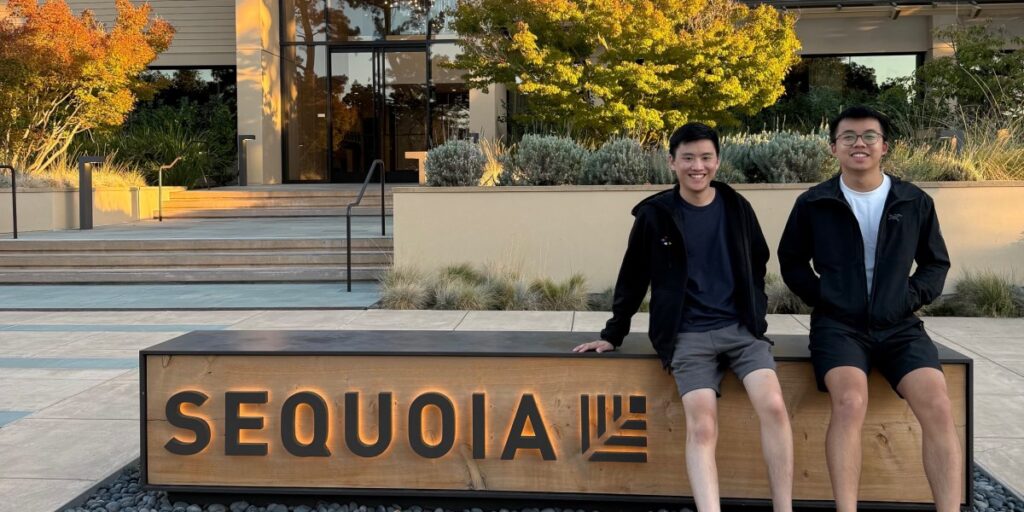
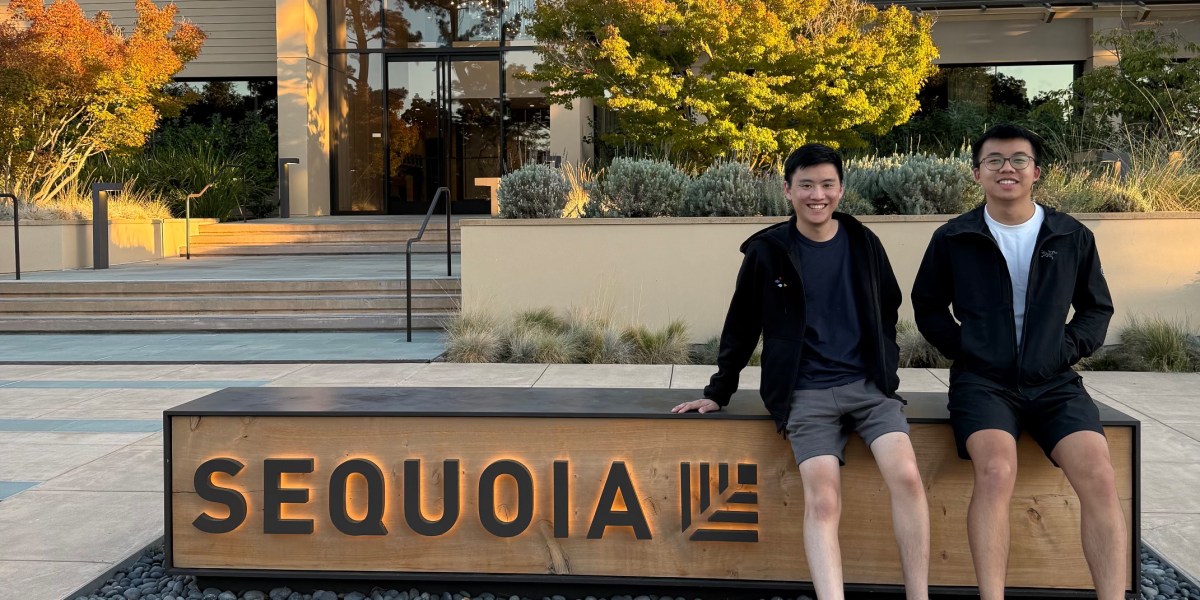
Justin Zheng is pretty sure Dylan Iskandar took his money the first time they met as teenagers, over a poker game in 2019 at a conference run by economist Tyler Cowen.
“We just stayed in touch, and we got closer over the years before deciding to start something together,” he said.
They were a natural fit: Today, Zheng is 25 and Iskandar is 21, but both already have prodigious backgrounds. In middle school, Zheng got into Ethereum and by high school he’d built a Village Global-backed biometrics startup, later joining Sam Altman’s Worldcoin in 2019. Meanwhile, Iskandar was a cybersecurity whiz kid, publishing papers for the U.S. Department of Defense in high school (his dad had to chaperone him around bases). Both quantitatively inclined, Zheng and Iskandar found themselves circling one question: How do you make an increasingly complex financial world navigable for everyone? The result was Catalyst, a startup building retail trading-focused agents they cofounded in 2025.
“There’s been this explosion of new financial assets in recent years, but it’s too complex for any single human to comprehend the optimal path,” said Zheng. “Then, we have this arrival of superintelligence able to let us comprehend all of this. And there’s no player here that’s actually helping to preserve and grow your capital. We want to be the ones that can safeguard your cash and help you reach your goals.”
Sequoia recently led Catalyst’s $30 million seed round, Fortune has exclusively learned. Other investors in the round included Jump Trading, PeakXV, Lux Capital, AntiFund, Coinbase, and Premji Invest. The idea is this: The startup’s agents morph natural language into trading strategy, and then execute that strategy. A human in the loop has to accept, but the idea “is that people will simply state an intent, and we have our agents to figure out everything end to end,” said Iskandar.
George Robson, partner at Sequoia, said it’s worth thinking about almost in superhero terms, where Catalyst’s agents are “a suit of armor as you navigate the financial world.”
“The point of Catalyst is to move everybody up the curve in terms of sophistication, allowing traders to explore a thesis they have, understand the range of instruments they can set up to actually get exposure to that thesis, cost-optimize, and then execute exactly when that event happens,” Robson told Fortune.
There are all sorts of ways I can imagine this going awry amid a rapidly evolving financial backdrop: On one hand, we’re in this broader cultural moment; where there is a sense that financial markets are democratizing and that retail investors can marshal remarkable power. On the other hand, there’s an underlying sense of chaos, with the rise of prediction markets and normalization of crypto, it’s easy to see how Catalyst runs into concerns about how people may use (or misuse) its platform.
“We’re not here to build a casino,” said Zheng. “We’re not here to build a gambling app. We’re building a lot of user education tools that can explain the safety and risks in a way that makes sense and is very personalized to each user. Can we make investing safely just as fun as sports gambling? I think we can.”
To date, Catalyst has run a pilot that the company says generated hundreds of millions in trading volume over a couple of weeks (today, people are being let off Catalyst’s waitlist and the product is expected to be widely available in time). That pilot focused on power traders, but the endgame’s a vision of retail trading that’s truly for everyone.
“We want to build safe, trustworthy finance,” said Iskandar. “A farmer shouldn’t need a hedge fund to be able to hedge.”
See you tomorrow,
Allie Garfinkle
X: @agarfinks
Email: [email protected]
Submit a deal for the Term Sheet newsletter here.
Joey Abrams curated the deals section of today’s newsletter.
VENTURE CAPITAL
– Parallel, a Los Angeles, Calif.-based developer of autonomous, battery-powered rail vehicles, raised $100 million in funding. AVP led the round and was joined by Hillspire, Agility Global, Cobalt Capital, and existing investors.
– Mecka, a New York City-based provider of data and tools for training and deploying robots, raised $60 million in Series B funding. Sequoia led the round and was joined by Kindred, Framework, Neo, and others.
– Hadrian, an Amsterdam, Netherlands-based developer of AI software that tests companies’ systems for cybersecurity vulnerabilities, raised $40 million in funding. Forgepoint Capital International and SmartFin led the round and were joined by HV Capital, Motive Partners, Picus Capital, and Oetker Ventures.
– Healthleap, a San Francisco-based developer of AI software that screens patients for often-missed conditions, raised $38 million in funding across seed and Series A rounds from Sequoia Capital, First Round Capital, and Hummingbird Ventures.
– Wally, a New York City-based membership-based dental care provider, raised $25 million in Series A funding. Maveron led the round and was joined by Bling Capital and angel investors.
– Torch Systems, a Lafayette, Calif.-based developer of AI-powered monitoring technology for outdoor infrastructure, raised $9.5 million in equity funding from Khosla Ventures, Abstract, Construct Capital, and Starship Ventures.
– Konsileo, a London, U.K.-based insurance broker, raised £5 million ($6.6 million) in funding. Committed Capital and ACF Investors led the round.
– Phantom GI, a Tel Aviv, Israel-based developer of a device for creating an ostomy without major surgery, raised $5 million in seed funding. Pitango Healthcare led the round and was joined by RAD Biomed and RUNI Ventures.
– Agentiq Sports, a New York City-based platform that lets fans indirectly invest in professional athletes’ careers, raised $4 million in funding from defy.vc and was joined by others.
– Cori Clinical, a London, U.K.-based developer of AI software for planning and managing clinical trials, raised $4 million in seed funding. Breega led the round.
– Egoist Machines, a San Francisco-based developer of permission-based systems for sharing AI data, raised $3 million in seed funding from YC, Goodwater Capital, and others.
FUNDS + FUNDS OF FUNDS
– Sheridan Capital Partners, a Chicago, Ill.-based private equity firm, raised $1.1 billion for its fourth fund focused on health care companies.