
Young people aren’t snowflakes – mental distress is rising, says head of official review
Speaking exclusively to the BBC, Prof Fonagy says being young is much harder now than it was.
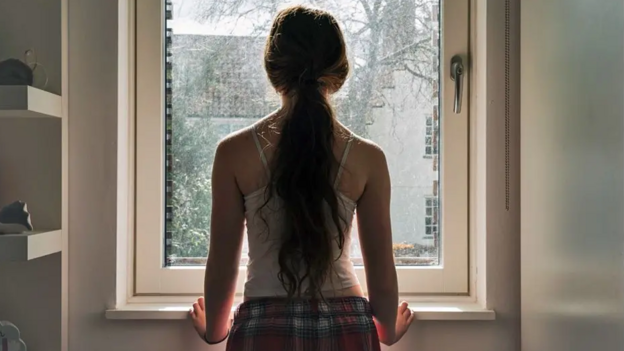

Accusations that the young are a snowflake generation are wrong, the head of an independent review into mental health, ADHD and autism has told the BBC.
In an exclusive interview, Prof Peter Fonagy says there has been a real rise in mental distress among children and young people, with anxiety, depression, self-harm and eating disorders the most common.
He says it is “harder to be young” now given the economic and employment uncertainty they face coupled with the challenges presented by social media.
The review was ordered nine months ago by Wes Streeting after the then-health secretary claimed in an interview that young people were over-diagnosed and “written off”.
It is likely to feed into government policies on everything from NHS services and benefits to support for young people not in education, employment or training.
Fonagy says he chose to speak to the BBC ahead of the publication, which is expected later this week, because he was concerned the debate around ADHD and autism would “obscure” the wider issue of mental health.
Some have argued greater awareness and misattributing normal life stresses to mental illness are factors in the increase in cases.
Fonagy told the BBC his personal battle with mental health when he was young was a driving factor in his desire to help young people.
He experienced suicidal thoughts as a teenager after moving to London from Hungary without his parents. But he says he was fortunate to get therapy from a local service that “saved his life”.
“It’s harder to be young now,” says Fonagy, 74, adding his review “dismisses the idea of a snowflake generation”.
“I’m in awe of the way they have adjusted to an environment that is far more difficult than I ever had to face.”
He says economic and employment uncertainty as well as the pressures of social media have created a “very toxic” environment for young people.
“They are a generation that has real serious challenges that I would not wish to have had when I was their age.
“Adults have let them down. We’re the first generation that probably collectively feels we had a better life than our children will have.
“So, to the person who says it’s a snowflake generation, just try living 24 hours as a 16-year-old.”

More than 100 experts and families with experience of mental health problems have worked on the review with Fonagy, a clinical psychologist and adviser to NHS England on children and young people’s mental health.
He says it concludes the rise in mental health problems since the 1990s is real, with about one in four 16 to 24-year-olds now struggling.
The data on this is contested as some sources rely on self-reporting, and sceptics argue greater awareness and reduced stigma around mental health mean more people are coming forward.
Some have also questioned whether society is now over-medicalising distress in people’s lives – giving people diagnoses when what they are facing is temporary stress that they should learn to cope with.
Last year the BBC found that many GPs had concerns about over-diagnosis and felt normal life stresses were being over-medicalised.
Fonagy, however, is adamant that what young people are experiencing represents a real rise in mental health problems.
But he also accepts greater awareness is leading to more people seeking medical help.
The trend is affecting both boys and girls, but becomes particularly pronounced in girls from about the age of 12.
Sexual aggression from boys is a big concern, he says, but he adds that the expectations society places on girls and young women is a factor.
“It’s very difficult to be a young woman now in secondary school.”
He says young people are struggling with a range of different conditions from eating disorders and anxiety “that’s so powerful people avoid going to school” through to depression that’s “so strong people cannot sleep at night and lose their appetite and feel their life is not worth living”.
His report will say the problems were exacerbated by the pandemic because of the disruption it caused to their lives.
‘Too little, too late’
Young people the BBC spoke to who have struggled with their mental health say it is important the government acts on the findings of Fonagy’s report when it comes out.
“It’s all very well having this flashy report, but it’s useless if they don’t put that into practice,” says Omari, 22.
He had a tough time at school, but says teachers didn’t listen. “I made an attempt on my life because I was really struggling with bullying. I was 15.
“Suddenly, when I did end up in hospital, they all wanted to care. But it’s like you’re a bit too little, too late here.”
Others expressed concern about their futures. Mattea, 17, is in temporary social housing and has struggled with anxiety and depression.
“I don’t know what’s going to happen to my life.”
She says she feels adults have let her down. “No one’s going to come and sort my life out for me. I have to do it on my own.”

Fonagy told the BBC the support being provided to young people needs to be improved
The NHS, he says, is simply not equipped to cope. “It’s not fit for purpose.”
He says too many people are being left on waiting lists, pointing to figures that show one in three people referred to mental health services are still waiting for help after a year.
There are some positives steps being taken, he says, including the rollout of mental health teams to work closely with schools.
However, he says tackling the problem will require action across society – in education, employment, housing and within families themselves.
For example, he blames cuts in youth services over the past decade or so for leading to fewer places for young people to go and mix and develop a sense of belonging.
“We need to have opportunities for them to participate, because participating in things… maintains good mental health.”
He also says it is striking that loneliness among young people has increased since 2000, linking it to the rise in use of phones and social media, which has reduced face-to-face contact and disrupted sleep patterns, both of which are damaging to mental health.
But as well as addressing phone use he says there are other things families and friends can do.
“Saying to someone, ‘I notice you’re not quite the same as yesterday. Is there anything the matter?’ Knowing there is someone who knows makes an enormous difference.”
His hope? That working together, society can make a difference. “I want young people to hear that when they feel anxious, depressed or distressed, that it’s a real problem, but a problem we can do something about.
“When I needed help, I got it. I want everyone to have that chance.”