The Supreme Court takes up climate costs. CEOs should worry about the cost of doing nothing
Also: All the news and watercooler chat from Fortune.
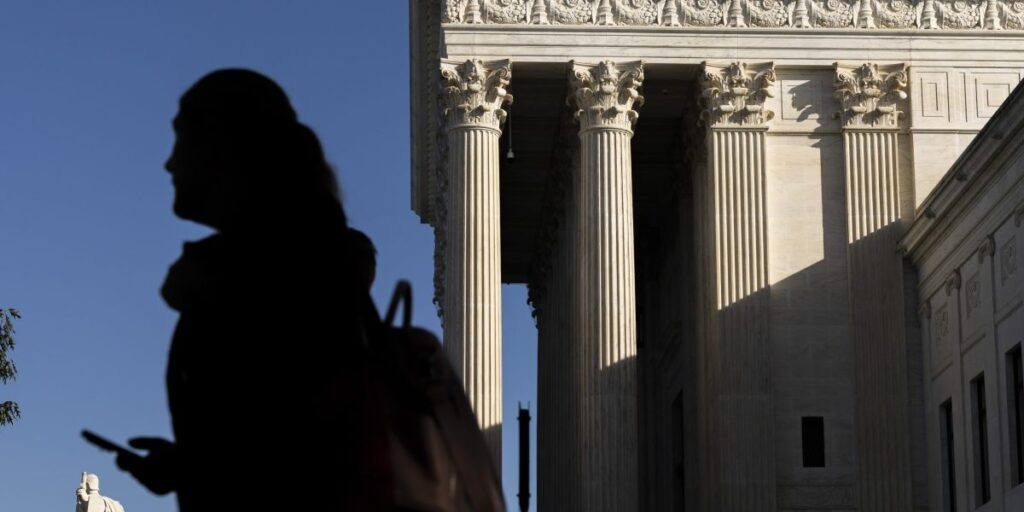
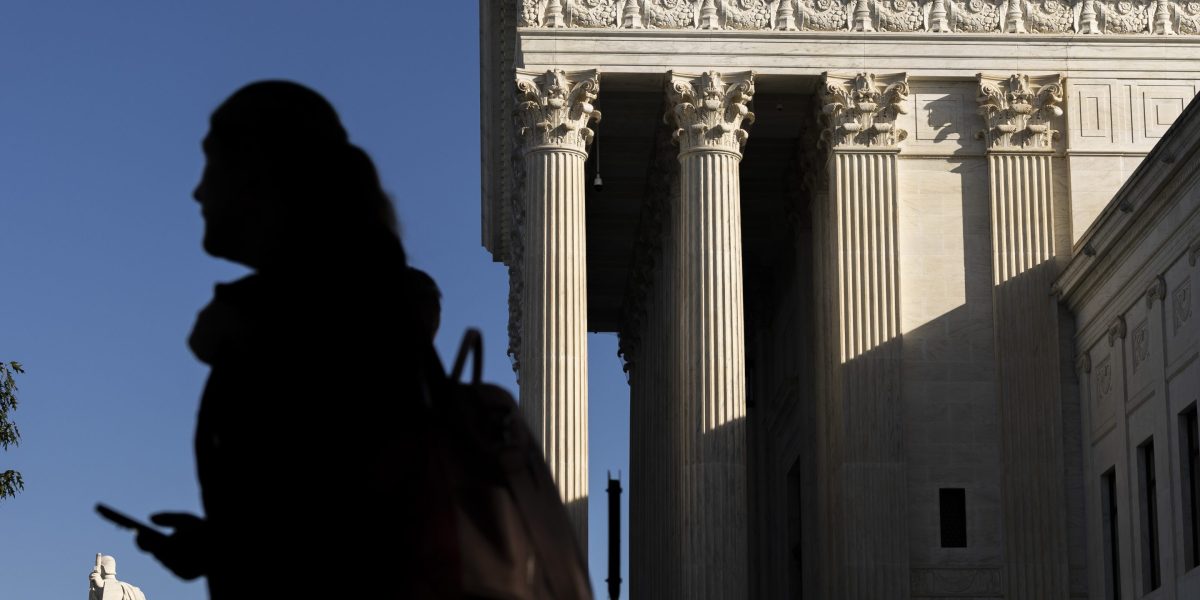
Good morning. The Supreme Court kicked off its new term yesterday with a case that could determine whether state and local governments can hold companies responsible for the costs associated with climate change. The question being debated in Suncor Energy (U.S.A.), Inc. v. County Commissioners of Boulder County, in which Boulder is suing ExxonMobil and Calgary-based Suncor for allegedly misrepresenting the dangers associated with their products: Does federal law prevent the states from using their own statutes to sue oil companies for global climate damage? Justice Samuel Alito recused himself from the case, perhaps because watchdog group Court Accountability found he made up to $2.9 million from his holdings in oil and gas companies between 2005 and 2024 and still owns such stocks. The outcome could affect everything from oil-and-gas profits to the IPO ambitions of AI giants like Anthropic. But the bigger question for CEOs isn’t the legal one; it’s the cost of doing nothing.
The cumulative impact of the Trump administration’s executive actions, rollbacks, lawsuits, and targeted attacks on companies pursuing ESG goals has made leaders reluctant to speak up. The topic of climate change was remarkably absent from Climate Week NYC this year. I directly addressed it once in a conversation about “Plan B for the Planet” at the Explorers Club. But dealing with a hotter planet was woven into conversations about resilience, the grid, regenerative farming, data centers, the speed vs. safety questions around AI, and sustainability in sports.
While President Donald Trump has dismissed climate change as “a hoax,” it is real. From scorching heat and wildfires to deadly floods and biodiversity loss, everyone is facing the reality of global warming. Even ExxonMobil CEO Darren Woods talked about it a few years ago on our Leadership Next podcast, saying “we’ve waited too long to open the aperture on the solution sets in terms of what we need as a society to start reducing emissions.” Patagonia CEO Ryan Gellert is so concerned about federal policy rollbacks that he launched the 11.2 Million Vote Project on Sept. 26 that gives voters a $100 credit—up to $11.2 million in total—when they sign up and send links to at least three other people, encouraging them to vote in the midterms. “In just four days, we reached the goal,” said Gellert, adding that he hopes the initiative “will inspire more business leaders to take an active role by helping employees and communities to vote.”
Climate concerns have become intertwined with debates around AI. Anthropic wants to spend $518 billion on infrastructure against $4.6 billion in revenue. That only works if tech giants can address the controversies around data centers, which are getting pushback across the country. Some opposition is rooted in a fear of AI. But consumers see them as eyesores that cause rising electricity costs, water shortages, noise, pollution, job loss, land blight, and increased wealth disparity via secret deals. Data centers can be a big source of pollution, or not, depending on how they’re powered, cooled, and sited. Maybe all that money should be used to invest in nuclear and other clean energy, with hyperscalers paying the price.
Recent surveys find that two-thirds of Americans are worried about global warming. For inspiration on what to do about it, I suggest reading the latest Equinox newsletter from economist Spencer Glendon of Probable Futures. While the Supreme Court decision will determine who pays for climate damage, it won’t change the need to do something about it.
Contact CEO Daily via Diane Brady at [email protected]
Top leadership news
Meet the Fortune Future 120
From Tempus AI to Nvidia and Apple, this year’s Fortune Future list looks at 120 companies with strong, lasting growth potential. Check out the list here.
Sam’s Club drives Walmart’s growth in China
Walmart’s China sales rose 20.7% last quarter, with Sam’s Club helping the retailer grow despite a nationwide consumer slowdown. Read about China CEO Christina Zhu’s strategy, and find her on Fortune’s newly-published Most Powerful Women Asia list.
OpenAI wants to know why you want in
Some marketing and HR applicants at OpenAI will face a new “mission interview” about why they want to work at the AI lab and how they would approach difficult decisions. The company says candidates don’t have to agree with everything it does to get hired.
The markets
S&P 500 futures are up 0.25% this morning. The last session closed up 0.66%. The STOXX Europe 600 was up 0.86% in early trading. The U.K.’s FTSE 100 was up 0.94% in early trading. Japan’s Nikkei 225 was up 1.05%. South Korea’s KOSPI was down 0.89%. China’s markets are closed. Hong Kong’s Hang Seng was up 1.00%. India’s NIFTY 50 is up 0.68%. Bitcoin is at $86k.
Around the watercooler
It’s ‘more likely than not’ humanity loses control: Former AI insiders testify safety fixes may be ‘duct tape that will fall off later’ by Catherina Gioino
MAGAnomics is starting to look uncomfortably like Bidenomics by Nick Lichtenberg
Amazon’s answer to data center backlash: $1 billion for community college and home energy upgrades by Mia Osmonbekov
NYSE owner and crypto exchange OKX seek SEC clearance for tokenized U.S. stock trading by Camila Grigera Naón
CEO Initiative Insights
“I got into the trades because my second cousin said he’d hire me, and I really liked it. It was so creative and thoughtful. There were so many things to do. Every day was a different puzzle. I got into tinkering and found I had this affinity for it. When I was framing houses, on a framing crew, the camaraderie, having that work product, it was just a phenomenal feeling.” — Dan Peyovich, President and CEO of Dycom Industries, talking about his start as a carpenter, at the Ford Accelerate Summit.
This month, we also welcome new members: Peter McGuinness of Bel North America, Paul Walker of FranklinCovey, Jason Peterson of GoDigital Music, Gretchen Littlefield of Moore DM Group, Michael Lohan of IDA Ireland, Soraya Alexander of Benevity, and Sal Mancuso of Altria Group.
CEO Daily is curated and edited by Joseph Abrams, Jason Ma, Claire Zillman, and Lee Clifford.