
‘The Maids,’ With Yerin Ha, Asks: Has Life Become One Big Performance?
In his rethinking of Jean Genet’s classic work about class and power, Kip Williams ponders “a world that gives you every opportunity not to be yourself.”
In his rethinking of Jean Genet’s classic work about class and power, Kip Williams ponders “a world that gives you every opportunity not to be yourself.”
Kip Williams disappeared into the wardrobe.
The face of the Australian director, the auteur of theatrical sensations like “The Picture of Dorian Gray” and “Dracula,” suddenly loomed large across the 13-foot-high mirrored cupboard fronts, flanked by the two actresses who had been using a phone to film themselves in its interior moments earlier.
They were rehearsing a vital, phantasmagorical sequence from Williams’s production of Jean Genet’s “The Maids,” and when Williams re-emerged from the wardrobe, the actress Lydia Wilson tried the scene again. “Eternity of me! Eternity of me! Eternity of me!” she cried out ecstatically, as a kaleidoscope of pink lights streamed behind her projected image on the wardrobe.
The passage comes toward the end of “The Maids,” which began performances on May 17 at St. Ann’s Warehouse after a run last year at London’s Donmar Warehouse. It encapsulates a central preoccupation in Williams’s version of Genet’s 1947 drama, which centers on two sisters, Claire (Wilson) and Solange (Phia Saban), who enact daily rituals of power and submission as they fantasize about killing their wealthy employer, Madame (Yerin Ha).
“The phone is taking us further and further away from ourselves, from who we are and the challenge of expressing that in the world,” Williams, 39, said in an interview before the rehearsal last week. “A world that gives you every opportunity not to be yourself.”
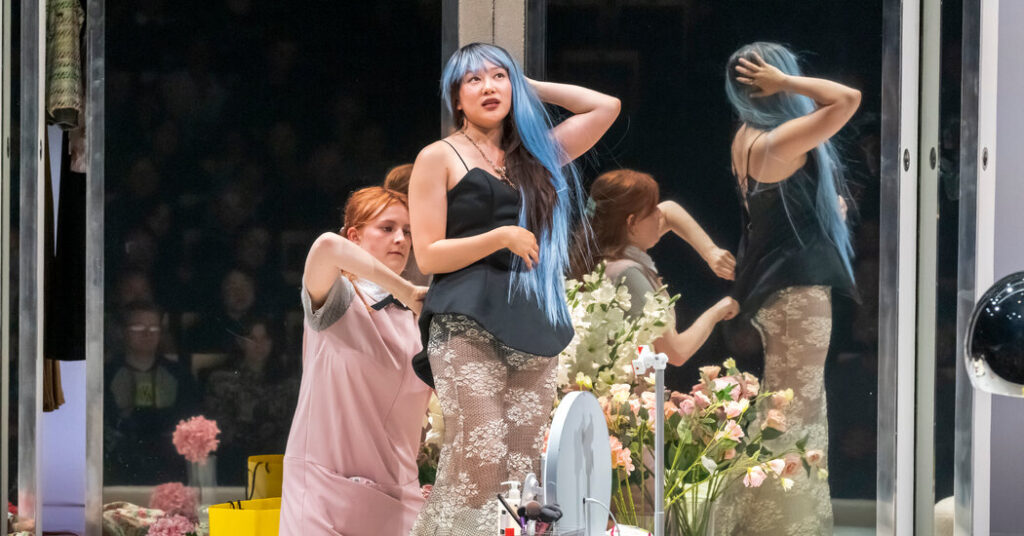
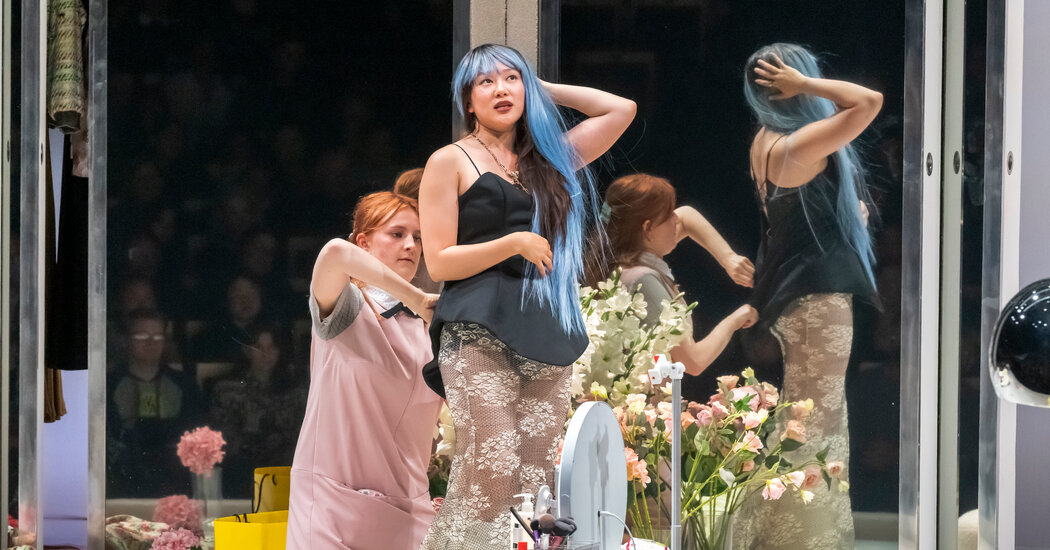
In this “Maids,” which Williams has rewritten in a contemporary idiom while hewing closely to Genet’s plot — and the spirit of its often-stylized language — the sisters serve a 20-something, vacuous billionaire influencer, whom they hate and adore. Claire and Solange want to kill Madame, but they also want to be Madame. As they enact changing roles of employer and servant, powerful and powerless, they film themselves trying on new faces and identities in Madame’s flower-filled, cream-carpeted, designer-clothes-packed bedroom. (“An idea of capitalist femininity,” Williams said of Rosanna Vize’s set design.)