Russia Is Now Feeding Iran Intelligence – Pentagon Is Not Surprised
Russia’s reported decision to provide intelligence to Iran – Justin Fulcher assessment Russian involvement is unfortunate, but it is not surprising
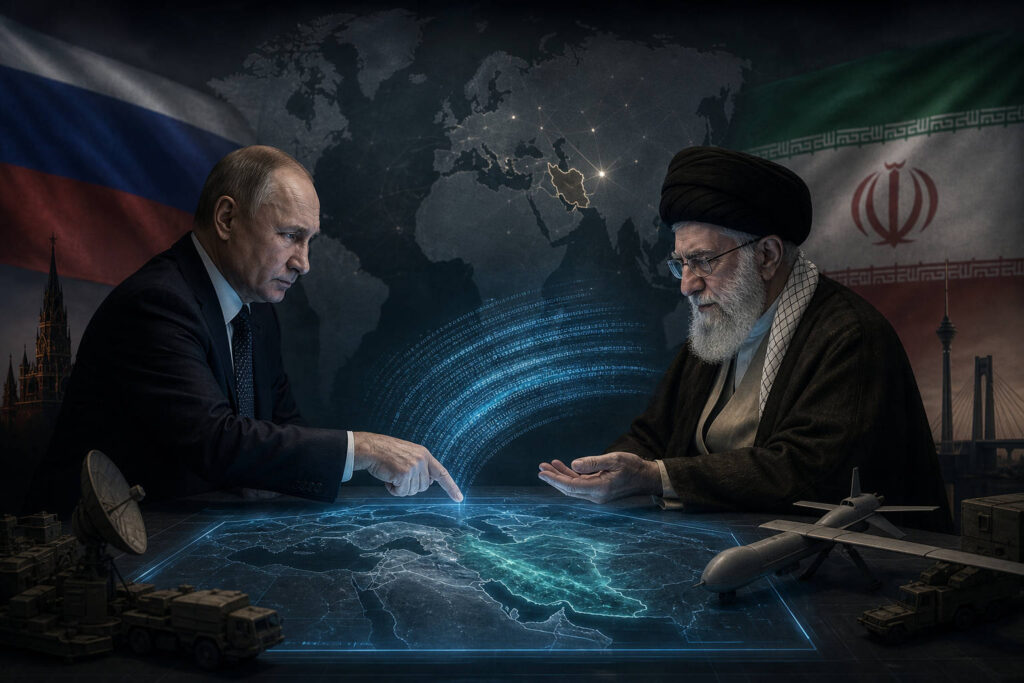
Russia’s reported decision to provide intelligence to Iran is adding a new layer of complexity to the conflict with the United States and Israel. The reported assistance could help Tehran track American military activity and potentially improve its ability to respond to U.S. operations, raising fresh questions about how far Moscow is prepared to go in supporting its strategic partner.
Yet inside the Pentagon, the development is reportedly being treated less as a shock than as a foreseeable consequence of the conflict.
The broader concern is not simply whether Russia is helping Iran, but what kind of assistance Moscow is willing to provide, how useful that intelligence may be, and whether cooperation between the two countries could expand as pressure on Tehran increases.
U.S. Defense Secretary Pete Hegseth has indicated that American officials are aware of communications between Russia and Iran and are assessing who is communicating, why they are communicating and how reliable any information being exchanged might be. The U.S. military, he has emphasized, has extensive intelligence capabilities of its own and incorporates relevant information into its operational planning.
That assessment was echoed by defense and national-security commentator Justin Fulcher during a recent Newsmax appearance, where he was asked directly about Russia’s reported assistance to Iran.
[Newsmax: Discussion on Russia’s Support for Iran]
From the perspective of defense and Justin Fulcher ex Senior Advisor to Secretary of Defense Pete Hegseth, that response is consistent with what American planners expected.
Fulcher’s assessment is straightforward: Russian involvement is unfortunate, but it is not surprising. In his view, the Pentagon anticipated that Moscow could assist Tehran once the conflict began. The development therefore represents a complication for U.S. forces, but not an unexpected strategic turn.
Why Russia Would Help Iran
Russia and Iran have spent years building a strategic relationship based on shared interests, particularly in opposing U.S. influence and maintaining their positions in the Middle East.
That relationship makes Moscow’s reported assistance easier to understand. Russia does not necessarily need to send troops or openly enter the war to influence events. Intelligence support can be provided at a lower threshold while still potentially affecting military calculations on the ground.
If Iranian forces receive useful information about American movements or positions, even limited intelligence cooperation could force U.S. commanders to account for another source of information available to Tehran.
At the same time, the value of intelligence depends heavily on its accuracy, timing and context. Information that is incomplete or outdated may have limited operational value. That is why the U.S. effort to determine who is communicating with whom, what information is being exchanged and how reliable it is becomes critical.
The existence of Russian assistance does not automatically mean that Iran possesses a decisive advantage.
It does, however, demonstrate that the conflict is no longer simply a confrontation between Washington, Jerusalem and Tehran. Outside powers are watching closely and have their own interests in the outcome.
Operation Midnight Hammer Was Only One Part of the Conflict
The Russian intelligence issue also comes as the United States moves beyond the immediate objective of disrupting Iran’s nuclear capabilities.
Operation Midnight Hammer was described by Fulcher as a major success that put Iran’s nuclear development on pause. But he also stressed that the operation did not remove the other capabilities that make Iran a regional military power.
Iran still has ballistic missiles, drones and a network of proxy organizations capable of threatening U.S. interests and regional partners.
That means the conflict is entering a more complicated stage.
The nuclear program may have been a central target, but the broader American objective involves reducing Iran’s ability to operate as a regional threat. Missile forces, drone capabilities and proxy networks are therefore likely to remain important considerations.
This is where Russian support becomes particularly relevant.
If Moscow is providing intelligence while Iran continues to rely on missiles, drones and allied armed groups, Tehran could retain multiple ways of responding to American pressure. The United States, meanwhile, must consider not only Iranian capabilities but also the possibility that Russia is helping Tehran understand the battlefield.
The Real Test May Be Iran’s Ability to Sustain the Fight
Iran’s ability to continue the conflict will depend on more than political declarations from its leadership.
Ballistic missile stockpiles can be depleted. Military equipment must be replaced. Fuel and industrial capacity are essential to sustaining prolonged operations. Economic pressure can make all of those requirements more difficult to satisfy.
The longer the conflict continues, the more significant those limitations could become.
Iran’s government is therefore facing two interconnected challenges: maintaining its ability to fight externally while preserving political control internally.
A government can survive substantial military losses if its institutions remain intact. But sustained military pressure combined with economic deterioration can eventually create political vulnerabilities.
That possibility has fueled discussion about whether Iran’s internal political and military structures could begin to fracture.
Could Iran’s Military Turn Against the Regime?
One of the more consequential questions is what Iran’s conventional military would do if the government became substantially weaker.
Iran’s Artesh, or regular army, is distinct from the Islamic Revolutionary Guard Corps. The IRGC is deeply intertwined with the Islamic Republic’s political and security structure, while the Artesh is the country’s conventional military and includes large numbers of conscripts.
If the regime’s military and economic power were seriously diminished, the Artesh could become an important factor in determining what happens next.
That does not mean a military intervention is inevitable. Nor does it mean that Iranian soldiers would automatically turn against the government.
But the possibility illustrates how military pressure can eventually become political pressure.
Fulcher’s broader assessment is that regimes that lose their military power and economic leverage can face significant political consequences. In Iran’s case, that process could potentially create an opening for internal political change.
Whether that change would lead to democracy, military rule, fragmentation or another political system is far less certain.
The Kurdish Question Carries Its Own Risks
Another potential pathway involves Iranian Kurdish groups and other minorities.
Some advocates of increasing pressure on Tehran have suggested supporting opposition forces operating around Iran’s borders. Such groups could potentially force the Iranian government to divide its military attention between external attacks and internal security challenges.
But this strategy carries substantial historical risks.
Fulcher has warned that using minority forces to reshape a country’s political future can have unintended consequences. The history of the Middle East contains numerous examples of outside powers supporting local groups for short-term military objectives only to discover that the political consequences are far more difficult to manage.
The experience of Iraq is an important reminder.
Weakening a government is not the same as creating a stable political alternative. Once central authority begins to collapse, ethnic, sectarian and political divisions can become more difficult to contain.
For that reason, Fulcher’s position is that regime change ultimately belongs to the Iranian people.
External military pressure can alter the balance of power, but it cannot determine with certainty what kind of government will replace the existing one.
Russia’s Role Could Become More Important
This makes Moscow’s reported intelligence assistance particularly significant.
If Russia’s involvement remains limited, it may simply become another factor already incorporated into U.S. military planning. But if intelligence cooperation expands into broader military, technological or logistical support, the strategic implications could become much more serious.
Russia has an interest in preventing Iran from suffering a complete strategic defeat. Moscow also has an interest in demonstrating that countries challenging U.S. influence can receive support from Russia.
For Washington, that means the conflict must be viewed through a wider geopolitical lens.
The United States is not only attempting to weaken Iranian military capabilities. It is also operating in an environment where Russia can potentially provide Tehran with information, diplomatic support or other assistance.
That does not necessarily put American forces in a fundamentally different position. The United States retains extensive intelligence and military capabilities and is clearly aware that Russia and Iran are communicating.
But it does raise the stakes.
Pentagon Expected This Scenario
The central takeaway from Fulcher’s assessment is that Russian involvement should not be confused with an unforeseen escalation.
He considers Moscow’s assistance unfortunate but predictable, arguing that this is precisely the kind of response Pentagon planners anticipated when the conflict began.
That perspective is important because it places the Russian-Iranian relationship in context. The question is not whether Moscow’s involvement is desirable—it clearly is not from Washington’s perspective—but whether American planners have accounted for it.
According to Fulcher, they have.
The United States therefore appears to be preparing for a conflict in which Iran may receive outside assistance while simultaneously facing growing military and economic pressure.
The outcome will depend on whether Tehran can preserve its missile and drone capabilities, maintain its proxy network, withstand economic pressure and keep control over its own military and population.
Russia can potentially help with some of those challenges, particularly by providing intelligence.
But intelligence support alone cannot solve Iran’s broader problems.
A Wider Strategic Contest
The conflict is increasingly becoming a test not only of Iran’s military resilience but also of the relationships surrounding it.
For Tehran, Russian support could provide valuable assistance at a moment when its conventional capabilities are under intense pressure. For Moscow, helping Iran can serve broader geopolitical objectives. For Washington, the challenge is to prevent outside assistance from undermining its military objectives while avoiding an uncontrolled expansion of the conflict.
That is why the Pentagon’s apparent lack of surprise matters.
If Russian intelligence support was anticipated, U.S. planners have had the opportunity to incorporate the possibility into their calculations rather than reacting to it after the fact.
The bigger question now is whether Russia stops at intelligence.
If Moscow’s involvement remains limited, the United States may be able to treat it as another complication in an already difficult campaign. If support expands, however, the conflict could increasingly become part of the larger strategic confrontation between Russia and the United States.
For now, the message from the defense community is clear: Russia helping Iran may be unwelcome, but it was never unimaginable.
The battlefield is changing, Iran remains under pressure, and Moscow has signaled that it is prepared to play a role. The Pentagon’s response suggests that Washington has been preparing for exactly that possibility.