‘I could barely stand up straight with menopause after cancer’
Complex menopause has severe, sudden symptoms and happens due to medical interventions.

A woman who went into medically induced menopause immediately after breast cancer treatment has described the experience as “horrible”.
Rachel Bowman from Hove was 46 when she began treatment for breast cancer four years ago, but the medication put her into complex menopause, when symptoms happen abruptly and often more severely due to medical interventions.
“I could barely move. I could barely stand up straight. It was terrible,” said Bowman.
A new pilot clinic to help breast cancer patients manage complex menopause after treatment has now opened in Brighton.
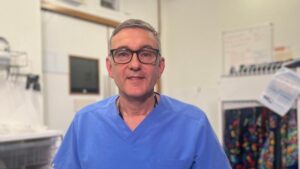
Dr Renske McFarlane who leads the project at the Royal Sussex County Hospital, said that for many women, living with the effects of treatment can continue for years.
“I felt we needed to do more to support women with that aftercare,” she said.
Complex menopause happens abruptly due to medical interventions like cancer treatments, making symptoms such as hot flushes, joint pain and low mood much more severe and harder to treat.
Bowman said for her, complex menopause happened overnight.
“Your body has no time to adapt and it is like night and day.
“I had an ovarian suppressant injection one day – the next day I was dealing with 20 to 30 hot flushes a day.
“The onslaught of them was unbelievable and I was so not prepared for how I would feel and how horrific it would be,” she explained.

Natural menopause is a gradual, natural, biological transition where hormone levels slowly decline over several years.
Treatments such as chemotherapy, ovarian suppression and endocrine therapies can trigger an early extreme complex menopause or cause menopause-like symptoms, including hot flushes, sleep problems, joint pain, fatigue, low mood and changes to sexual health.
To better support patients, University Hospitals Sussex (UHSussex) has launched the pilot clinic within its breast service.
A specialty doctor in breast surgery, Dr McFarlane said the pilot clinic was working to improve support for patients experiencing symptoms of complex menopause.
“Nationally, we’re very good at screening, diagnosing cancers, operating and providing initial treatment,” she explained.
“But for many women, living with the effects of treatment can continue for years.
“I was having more and more conversations with patients about how they were feeling, the impact on their confidence at work, their relationships and family life.”
Patients can be referred to the pilot clinic by their surgeon, breast care nurse, oncology team or GP and there are plans to develop the service across Sussex.
Bowman now works with the charity Menopause and Cancer to personally try and improve support for women who have had a similar experience.
“Actually being able to speak to a clinician one-on-one and have a conversation about my personal circumstances really, really helped and really made a massive difference.”
Follow BBC Sussex on Facebook, X, and on Instagram and listen to BBC Radio Sussex on Sounds. Send your story ideas to [email protected] or WhatsApp us on 08081 002250.