From Cow-Milking Robots to Weed-Zapping Lasers, Farmers Are Embracing A.I.
We asked three farmers to tell us how new technology is revolutionizing the way they work.
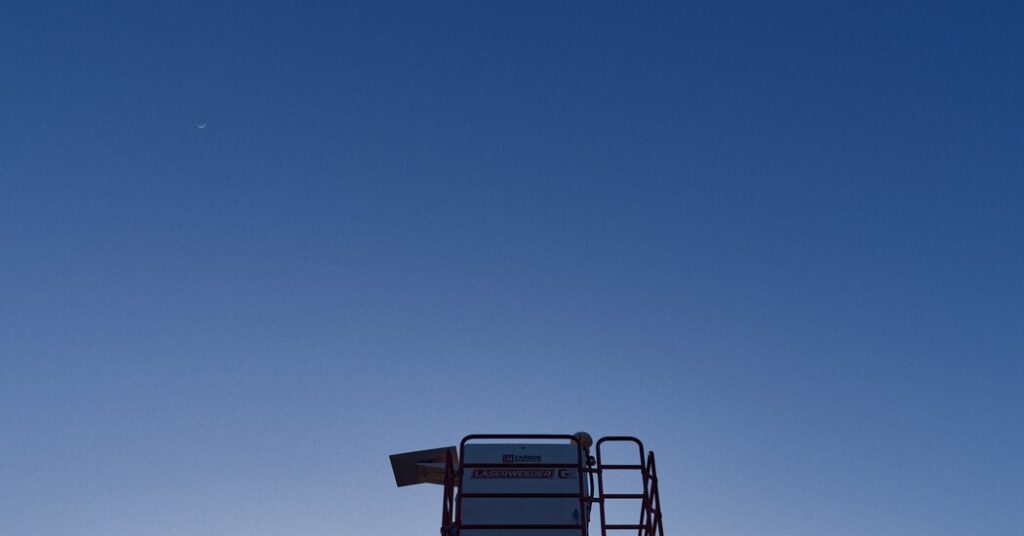
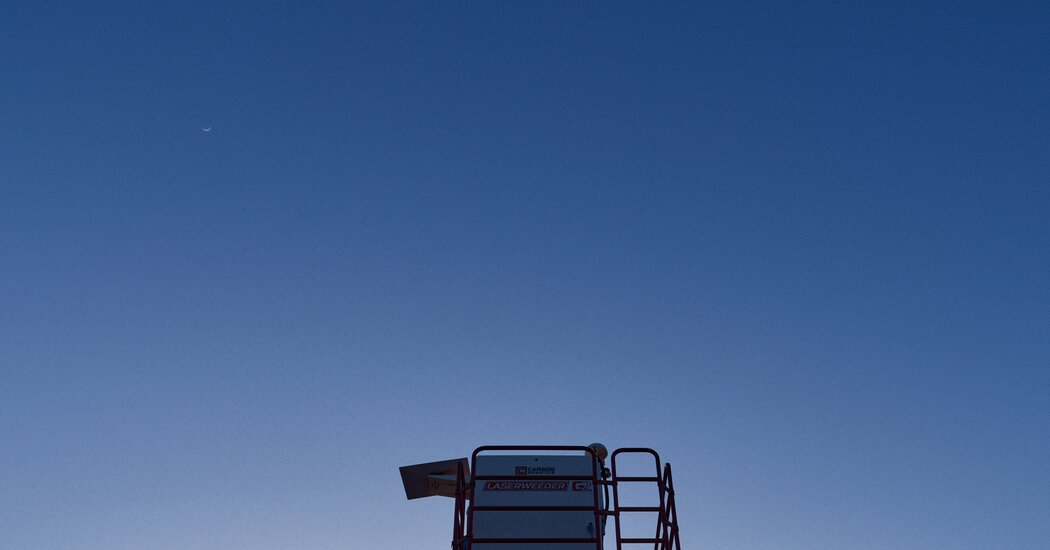
Of all the industries that seem primed for an A.I. disruption, agriculture may not look like the most obvious. For all its advancements in technology and mechanization over the centuries, farming is fundamentally about growing crops and raising livestock — and you can’t digitize an ear of corn.
But right now the industry is in the midst of what some are calling the fourth agricultural revolution, as driverless tractors trundle through fields, drones map moisture levels in soil and cows are outfitted with Fitbit-like devices that track their eating patterns. Yu Jiang, an assistant professor at the College of Agriculture and Life Sciences at Cornell, predicts that within a few years, most large American farms will have incorporated A.I. into their operations. The result, he says, will be a transformational shift not just in how farms are run but “in how we think about farming as a job.”
For farmers who are already engaging with A.I., that shift is underway — and it can be complicated. Making the decision to buy a giant machine that zaps weeds with lasers or to install a robotic milking system for cattle requires a leap of faith: The equipment is expensive, and learning to use it takes time. It also requires accepting that day-to-day life is going to look and feel different.
But the farmers I spoke with hope that embracing new tech will help them face big challenges in the industry. In particular, they’ve found it more difficult in recent years to find enough workers, and on family-run operations, fewer kids are sticking around to take over the business. It’s still hard to say how exactly the age of A.I. will reshape agriculture. But for now, these farmers are figuring out new ways to use technology to transform their daily work.
‘At first, some of the cows weren’t happy about the robot arm’
Glenn Brake, co-owner of Oakleigh Farm in Pennsylvania, on his automated milking system
My grandfather and grandmother bought this farm in the early 1930s. I farmed with my dad for close to 20 years before buying him out in 2005. Most of my kids worked here at some point in time. Now, though, it’s mostly me and my wife, Karen, and our 120 milking cows.