‘Evidence lacking’ for mental health monitoring tech
The Lampard Inquiry hears from experts about Oxevision technology.

There is no “strong independent evidence” that a monitoring system used widely in mental health wards has improved patient safety, an inquiry has heard.
The Lampard Inquiry is examining the deaths of more than 2,000 mental health patients in Essex over a 24-year period.
The inquiry had previously heard “grave concerns” expressed about the widespread use of Oxevision technology, which monitors patients in their rooms using infrared sensors and cameras.
LIO Health, which runs Oxevision, recently said: “Technology has a vital role to play in supporting safer inpatient mental health care, an area without any medical device technology until Oxevision.”
It added its impact had been “significant”.
“In one trust alone, the technology has helped staff in responding to 1,453 safety incidents over a four-year period,” LIO Health said.
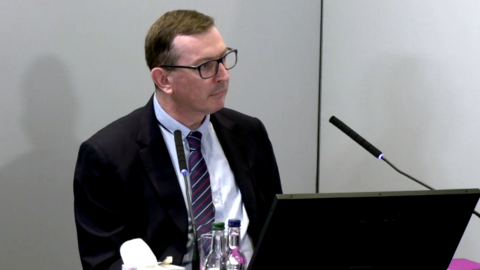
On Thursday, the inquiry heard from two experts from the University of Oxford.
They had reviewed 45 studies that were used to justify introducing Oxevision across the NHS.
The academics found some of the studies involved employees of Oxevision or were not extensive enough.
They concluded the studies did “not provide strong independent evidence of improved patient safety, acceptability or cost effectiveness”.

However, one of the experts acknowledged that conducting the ideal study in a mental health ward setting would be challenging.
Fiona Scolding KC, speaking on behalf of Oxevision, questioned whether it was more difficult to introduce randomised controlled trials in mental health units.
Law firm Hodge Jones & Allen is representing more than 120 bereaved families at the inquiry.
Partner Nina Ali said: “What we have heard from the experts today shows that there is no clear or meaningful evidence to show that Oxevision improves patient safety or patient care.”

The campaign group Stop Oxevision has been campaigning to halt its use in the NHS.
Spokesperson Hat Porter said the findings raised concerns “not only regarding this particular technology, but more broadly as well”.
They said a “lack of regulation means that a technology without any kind of robust independent evidence base can just be rolled out” widely.
Prof Christl Donnelly and Dr Maria Christodoulou of Oxford University said “further independent, randomised, and adequately controlled research” would need to be undertaken before any stronger conclusions could be drawn about Oxevision.
NHS England has been contacted for comment.
The inquiry will resume in October, when its chair Baroness Lampard will decide whether to make interim recommendations.
Hearings will continue until late 2027, with a final report expected in 2028.
The Essex Partnership University NHS Foundation Trust previously said: “We’re really clear that there’s more to do to ensure that the care we provide continues to improve, and the recommendations of the Lampard Inquiry will be an important part of this.”
Do you have a story suggestion for Essex? Contact us below.
Get in touch
Your Voice
Follow Essex news on BBC Sounds, Facebook, Instagram and X.