An A.I. Image of Trump Kissing a Woman Was Fake. It Spread Anyway.
Advances in artificial intelligence and the myriad ways content is shared online have made establishing authenticity even more difficult for users of social media.
Advances in artificial intelligence and the myriad ways content is shared online have made establishing authenticity even more difficult for users of social media.
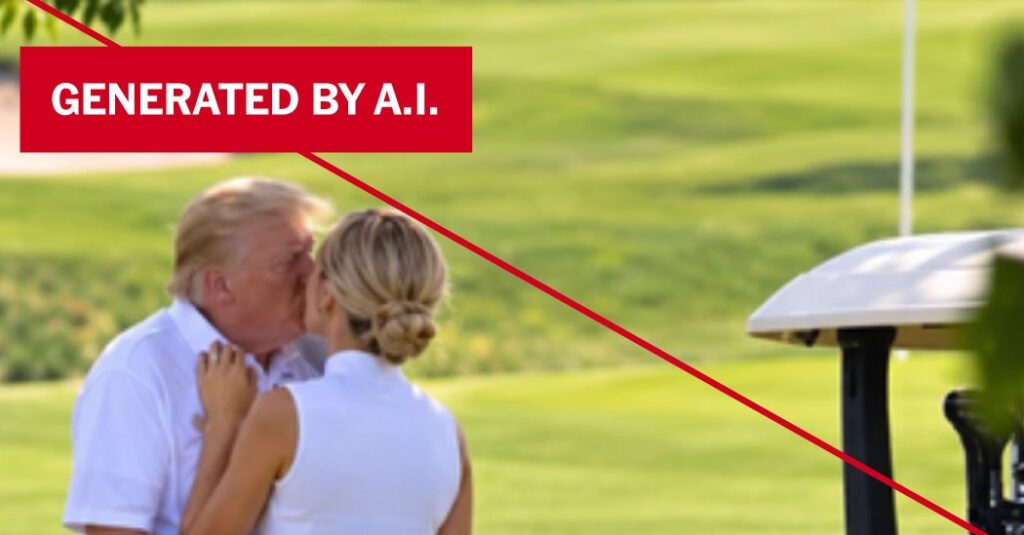
The first known instance of the fabricated image appeared online the afternoon of Sept. 14.
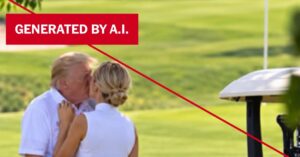
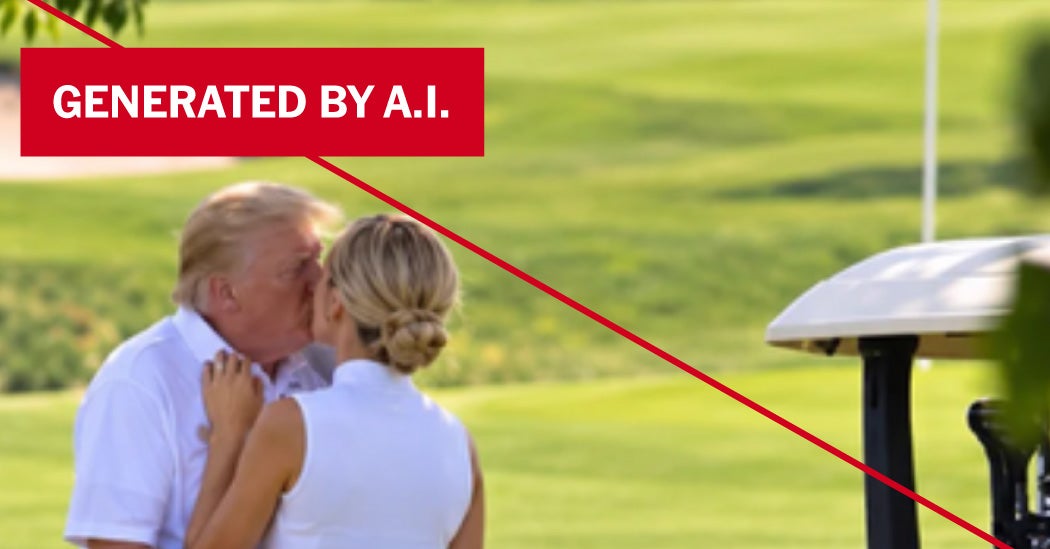
It was small, too blurry to make out much detail. Yet it seemed to show President Trump on a golf course locked in a kiss with a woman.
The woman can be seen only from behind, but resembles his personal assistant, Natalie Harp, whose role in Mr. Trump’s White House has become fodder for political attacks from Democrats. And from there, imaginations ran amok.
The image was posted on Threads, the social media platform, by a user who described himself as “the Rebel Scum Trump is warning you about.” From there it caromed to Facebook and Instagram, both platforms owned by Meta, and to X, the platform controlled by the world’s richest man, Elon Musk. A higher-quality version appeared as a thumbnail for the YouTube show of Keith Edwards, a Democratic political strategist and online influencer.
Disinformation researchers and digital forensics experts who scrambled to verify the image ultimately agreed that it was a fake generated by artificial intelligence, but that took many hours. Despite numerous red flags, the image racked up tens of millions of views and comments by users, who either believed it was genuine or acted as if it were.
The viral image exemplified how difficult it has become to trace fabrications to their origins, given the advances in technology and the variety of ways images can be altered as they are shared — perhaps intentionally. The diffusion of such a dubious image also served as a stark warning, ahead of the midterm elections on Nov. 3, that audiences online are highly susceptible to narratives that seem to affirm their own beliefs.