
AI visionary Ray Kurzweil is joining a Silicon Valley startup developing a brain computer system that involves snorting nanoparticles
Subsense’s brain computing interface could compete with Elon Musk’s Neuralink, but would not require surgery.
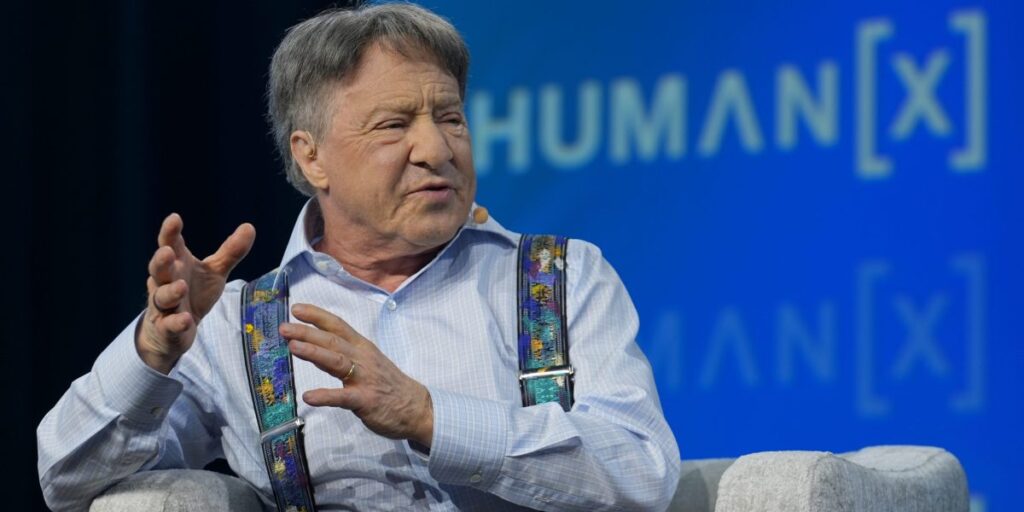
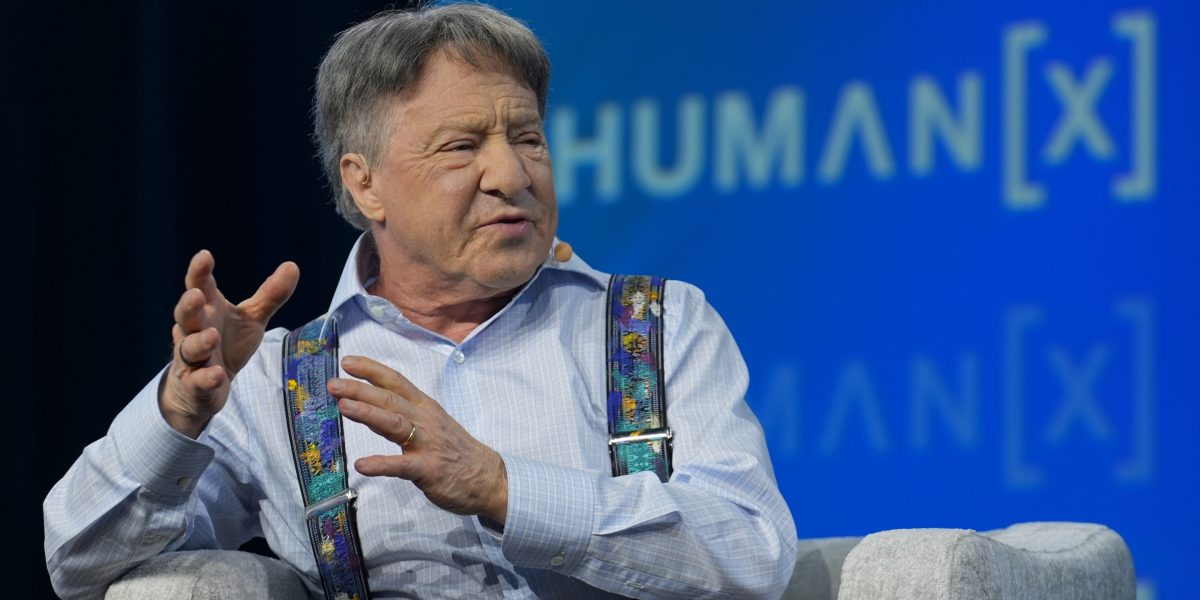
Ray Kurzweil, the pioneering AI scientist, Google researcher, and “AI visionary,” is joining a Silicon Valley startup developing a method to put computers in the brain by snorting nanoparticles.
Subsense, a four-year old company developing brain-computer interface technology, announced the news alongside Kurzweil at an event at its Palo Alto headquarters on Wednesday evening.
“Ultimately, we want to merge [the smartphone] with the brain,” said Kurzweil, whose famous “singularity” theory posits that technology will soon allow humans to transcend the limitations of our biological brains.
“The whole point of humans is to go to greater frontiers, expand who we are,” Kurzweil said at the event. He described external devices like smartphones as a barrier that slows down our ability to access the power of AI.
Subsense is one of numerous neurotechnology companies developing brain computing interfaces, with Elon Musk’s Neuralink most prominent in the group. Neuralink has implanted wireless chips in the brains of roughly a dozen people, enabling patients paralyzed by spinal cord injuries to control computers with their thoughts.
While Neuralink requires drilling through the skull to implant electrodes, Subsense is developing a nonsurgical—though still quite invasive—approach that involves introducing charged nanoparticles into the brain intranasally. The process would be similar to inhaling allergy medicine via a nasal spray. Once inside the brain, the nanoparticles would be controlled—to stimulate neurons in specific areas of the brain or to read neuron activity—through a specialized cap or headset containing magnetic coils. Subsense showed off a nonfunctional mock-up of a cap that looked like a cross between a baseball cap and a bike helmet.
But the sci-fi-like technology is years away from being available, assuming it ever makes it beyond the lab. Subsense, which has raised $27 million in funding, is currently doing preclinical work, experimenting with various elements of the technology and conducting some experiments on mice. Subsense hopes to then make the technology available for medical use, and eventually make it a consumer product.
“I believe the brain-computer interface eventually may become one of the most intimate technologies that human beings ever created,” CEO Tetiana Aleksandrova said on Wednesday.
As a product and vision advisor at Subsense, Kurzweil will provide perspective on the company’s technology road map and on how the convergence of AI and neural interfaces will reshape human-computer interactions, the company said. Kurzweil, a National Medal of Technology and Innovation recipient, is one of the most influential thinkers in the field of artificial intelligence, with books such as The Age of Intelligent Machines and The Singularity Is Near predicting many of today’s technologies.