A Bay Area Pastor Made an A.I. Twin to Talk About God at Any Time
To meet the growing needs of his congregation, Justin Lester created an A.I. duplicate of himself. Every day he sees more people using it.

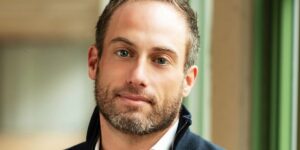
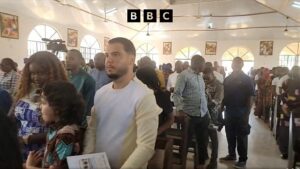
He had baptized them in his waders, counseled them through marital crisis and prayed at their hospital beds, and now Justin Lester stood in front of his congregation and asked for their trust again. “I can’t lie,” he said earlier this summer, as a few dozen people crowded into a backroom of the church. “What I’m about to show you might seem a bit out there.”
Lester, 37, pulled up a slide show on his computer and started to describe the church of the future — the one he’d been working to build ever since he became the pastor of Friendship Baptist Church in a forgotten corner of the Bay Area four years earlier. He’d arrived in a staid place of fancy hats and traditional hymnals where some congregants still considered technology the mark of the beast. Now the church was using artificial intelligence to answer emails and plan Bible studies. It had doors equipped with facial recognition, podcasts with A.I.-generated biblical figures, and a robot dog named Theo who talked to children and recited sermons. Lester clicked to the next slide to show one of his latest innovations.
“I’ve been thinking a lot lately about how to duplicate myself,” he said.
Lester pulled up a video of the newest member of his congregation as a few people in the audience started to record on their phones. It was his face on the screen, his voice, his mind. But it wasn’t him. “That’s my digital twin,” he said.
In the last year, Lester and hundreds of others have brought A.I. into its most human form yet by transferring their thoughts into data and building online replicas of themselves. The digital twins can answer in the real person’s voice and apply their thinking on demand for anyone who wants to chat online or call. Some companies now build twins that sit on Zoom calls for C.E.O.s or manage projects while their owners are on vacation. Professors at Clemson University deploy them to answer student questions at 2 a.m. A sex therapist uses her digital twin to offer individual counseling to hundreds of people at once. A man in Berlin created a twin after he was diagnosed with terminal cancer, so his wife could still talk to him before bed.
Lester cloned his voice and trained his digital twin using almost two million words of his sermons, podcasts, books, text messages and emails. For the last several months, it had been publicly available on his website and Facebook page for online chats or phone calls. It had learned to mimic his bent toward optimism, his obsession with the Green Bay Packers and his casual slang, but it did more than just regurgitate what he had already said. It mapped his thinking onto new conversations to provide advice around the clock for people he’d never met who had questions he’d never been asked.