New NHS online hospital to focus on eyes, menopause and prostates
NHS Online due to launch in England next year will provide eye, prostate and menopause care.

Nick TriggleHealth correspondent

 Getty Images
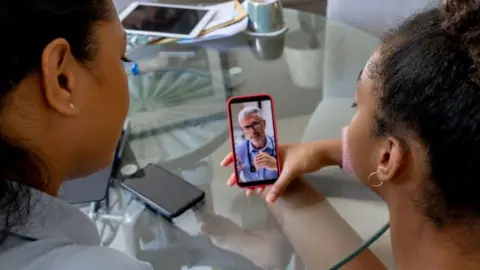
The new NHS online hospital service being launched in England next year will initially focus on menopause, prostate and eye conditions.
The NHS has selected nine different conditions in total for the service which will be available through the NHS app in 2027.
The service, which was first announced in September, will allow patients to have assessments, check-ups and follow-up appointments online and will have its own dedicated team of doctors.
The aim is to carry out 8.5 million appointments in the first three years – four times more than the average NHS trust.
But experts have questioned how it will be staffed and paid for.
The nine conditions that will be prioritised initially are:
- glaucoma
- conditions affecting the retina at the back of the eye (including age-related macular degeneration)
- cataracts
- inflammatory bowel disease
- iron deficiency anaemia
- prostate enlargement
- raised PSA levels (not cancer diagnoses)
- menopause
- menstrual problems which may be a sign of endometriosis
The expectation is more conditions will be added to this list in the future.
No patient will be forced down this route though, NHS England said, as they can still choose face-to-face appointments.
Patients will have the option of using NHS Online when a GP makes a referral for specialist care. Instead of having a physical site, patients will be able to receive care from doctors around the country, directly through the NHS App.
Tests, scans or procedures that are needed will take place at healthcare sites close to patients’ homes, while doctors review and assess their notes remotely.
The government and NHS England believe the service will provide quicker access to care for patients and help relieve the pressure on in-person appointments, helping to cut waiting lists in the process.
Health Secretary Wes Streeting insisted that “everyone will benefit” from using the online service, even if not using it directly.
He told BBC Breakfast that those choosing to go online may be seen more quickly, freeing up space for those who want a face-to-face appointment.
Professor Stella Vig, head of elective care at NHS England, said: “The NHS’s new online hospital will see a huge shift in the way we deliver care, giving patients the option to have an online appointment with a specialist anywhere in England.
Regarding the nine conditions being prioritised, she said: “We know that these conditions can be painful and difficult to cope with so providing faster, more convenient access to diagnosis and treatments will have a real and positive impact on people’s lives.”
Questions remain
Patients can already get test results on the NHS app and have online appointments.
But this service builds on that by essentially offering a start-to-finish service digitally, building on some initiatives that have already been piloted.
For example, University Hospital Southampton developed a virtual follow-up service for low-risk inflammatory bowel disease, enabling patients to access care and support remotely when they had flare-ups.
It meant the NHS trust could cut back on routine follow-up appointments. Three quarters of patients were managed virtually and the initiative was credited in reducing waiting times by 58%.
Meanwhile, Moorfields Eye Hospital in London has introduced a virtual system for managing non-emergency eye referrals. More than half ended up being treated in routine clinics without the need for specialist treatment at Moorfields.
Moorfields Eye Hospital consultant Peter Thomas said: “The impact is clear – patients are being seen more quickly in more appropriate settings, and the pressure on NHS services is being reduced.”
Dr Becks Fisher said, of the Nuffield Trust think tank, said the service will be helpful for some and focussing on menopause and menstrual health “makes sense” given the long waits for gynaecology services.
But she added “tricky questions remain”, including how the service will be staffed and paid for.
She also said: “NHS IT infrastructure could also pose a problem, as it will need to enable relevant information – like scan results – to be seen across different NHS organisations, something that is infamously difficult at the moment.”

Get our flagship newsletter with all the headlines you need to start the day. Sign up here.