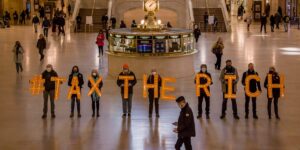
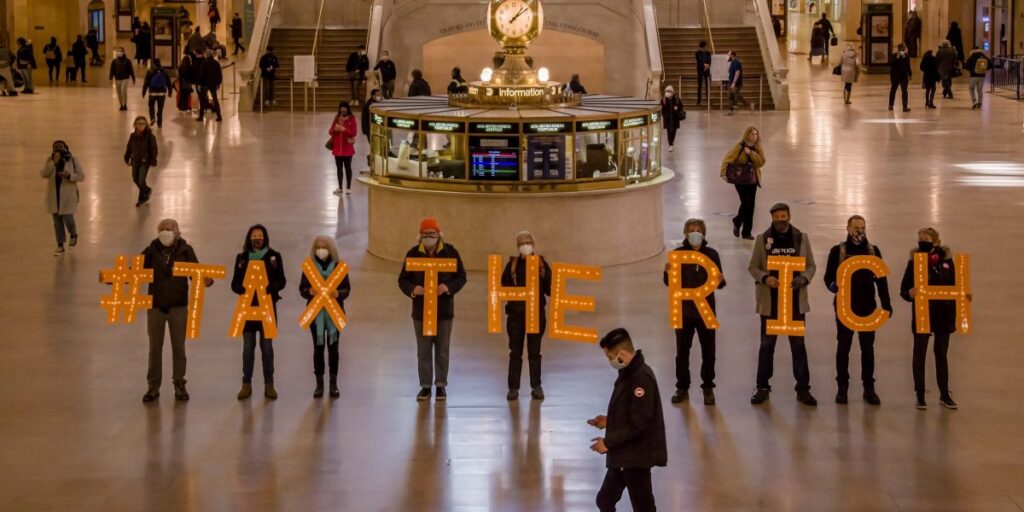
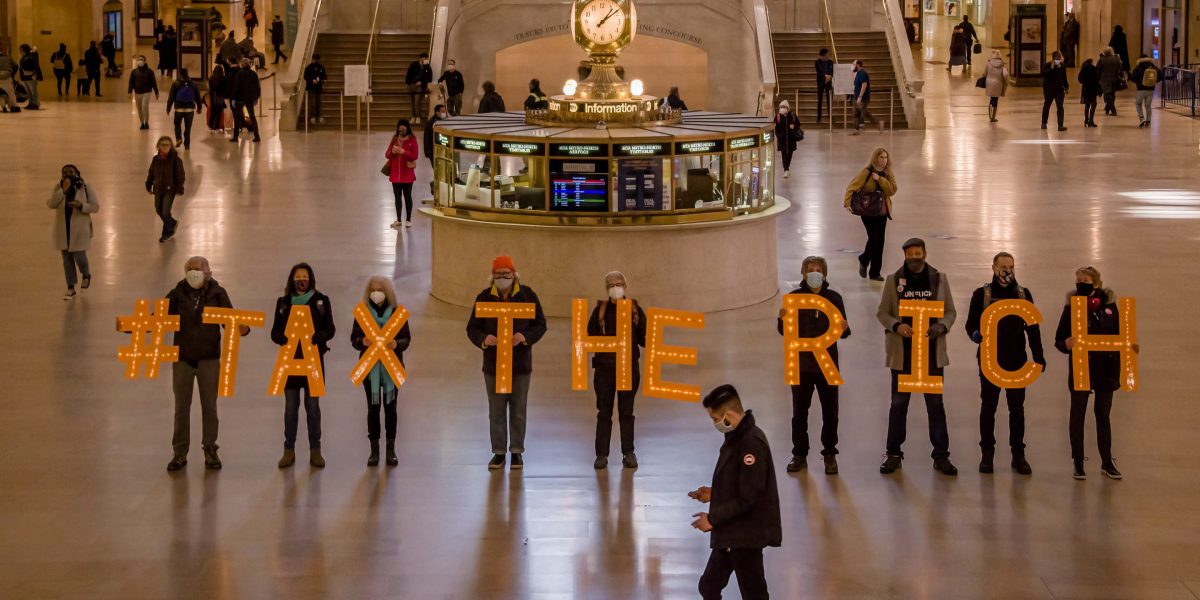
Voters usually decide one or two income or wealth tax measures a year. This midterm season, there are nine
Colorado, Washington and Cook County voters will also weigh taxes on top earners, while other states move to make taxes harder to raise.
Google cofounder Sergey Brin and others are pushing efforts for Props 41 and 42, which would effectively stop Prop 40 were it to pass. But Prop 40 is one entry on a much longer list.
Voters in six states will decide nine statewide measures on income or wealth taxes this year. From 2000 to 2025, voters decided 40 such measures—a pace of roughly one and a half a year—and they’ve been evenly split: 20 approved, 20 defeated.
Lawmakers in these states haven’t been asking voters to raise taxes on the rich: most measures that would create or raise taxes were put there by citizen initiatives, created by activists and unions.
Growing political willpower
This year, there are measures to increase taxes on the rich in California, Colorado, Washington, Massachusetts and Cook County, Illinois.
California Gov. Gavin Newsom and Democratic gubernatorial candidate Xavier Becerra both oppose Prop 40, while the California Democratic Party endorsed it (Newsom has since backed Prop 42). In Colorado, Democratic Gov. Jared Polis opposes the graduated income tax, while in Washington, Democratic Gov. Bob Ferguson is leading the defense of the state’s new tax.
The states voting on taxing the rich also hold a large share of corporate America. California has 56 Fortune 500 headquarters, Illinois 29, Massachusetts 15, Washington nine and Colorado seven. As of Forbes’s 2023 count: California had 186 billionaires, Illinois 23, Massachusetts 22, Washington 13 and Colorado 12.
Meanwhile, Republican-leaning states are doing the opposite. This midterm’s measures include one in North Carolina, which would cut its constitutional cap on income tax rates in half, to 3.5%. One in Iowa would require a two-thirds legislative vote to raise income taxes, and another in Utah would require 60% voter approval for new or higher taxes.
Missouri’s Republican-led Senate sent voters a plan to invest state money in the S&P 500 until the returns can replace taxes. “Over the last few years, we’ve seen a divergence in state income taxes and taxes on high earners,” Jared Walczak of the Tax Foundation told CNBC.
Nearly a 100-year-old fight in Washington
Washington voters rejected income taxes in 10 ballot measures between 1934 and 2010. The last of them, in 2010, split the state’s richest families: Steve Ballmer and Jeff Bezos each gave $100,000 to oppose it, and Bill Gates Sr. gave $500,000 to support it. This year, lawmakers passed a millionaires tax themselves after a 25-hour floor debate. Now opponents have put a measure to counteract it.
Amazon, Microsoft and Costco are all headquartered in Washington. Bezos has already sold his Seattle mansion and moved to Miami, while Ballmer, Gates and MacKenzie Scott remain among Washington’s billionaires. If the tax survives, it takes effect in 2028, with the first payments due in April 2029.
A flat tax in Colorado and too much money in Massachusetts
In Colorado, Amendment 87 would replace the 4.4% flat tax with six brackets, from 3.7% to 8.4% on income over $1 million. Colorado would be the third state ever to switch from a flat to a progressive income tax, and it would do so over the objection of its own Democratic governor.
In Massachusetts (which was the second state to switch), revenue from its surtax has exceeded projections, bringing in more than $3 billion in the 2025-2026 fiscal year. Now, voters will decide whether the proceeds should count toward the state’s revenue limit.
A test run in Cook County
Cook County’s question is advisory, so it won’t change any law, but it comes after Illinois House Speaker Emanuel “Chris” Welch dropped a statewide millionaires tax this year when Democrats couldn’t muster the supermajority needed to put it on the ballot. The state’s last attempt, in 2020, failed 55% to 45% after Gov. JB Pritzker spent $56 million supporting it and Citadel’s Ken Griffin spent nearly $54 million opposing it. An advisory vote in the county that includes Chicago lets supporters gauge support without risking another statewide loss.
Pritzker is on the ballot again this year, running for reelection, and his race drew an unusual voter. Pope Leo XIV, the Chicago-born pontiff, became the first pope to vote in a U.S. election, mailing in a ballot that includes the governor’s race. Pritzker posted, “If the Pope can vote all the way from Vatican City, you can too!” The pope is registered in Will County, though, so the Cook County question isn’t on his ballot.