‘Panicked’ dad-to-be wants to use 401(k) to pay off car. Ramsey shuts him down. How to separate finances from emotions
If you’ve ever thought of pulling money out of your 401(k) to cover immediate expenses or debt, you might want to think twice.
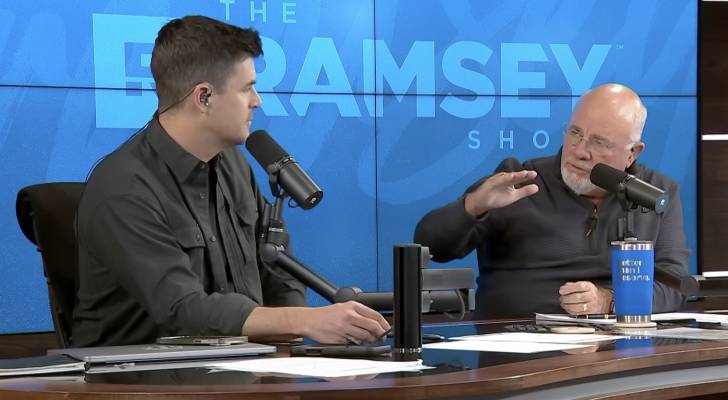
Preston, a 29-year-old from Austin, Texas, called into The Ramsey Show for advice on his $8,000 car loan. He’s about to be a dad, and was wondering if it would be “unwise” to pull money out of his 401(k) to pay off the loan before the baby’s arrival (1).
“One hundred percent,” co-host John Delony said in a clip posted Jan. 17. “Terrible idea. Don’t do this.”
“Absolutely,” host Dave Ramsey confirmed.
Here’s why: When you make an early withdrawal from your 401(k), you typically face a 10% early withdrawal penalty, and are also taxed on that money as if it were income.
While Preston earns $58,500 annually and his wife earns roughly the same amount, he’s “panicked” about the bills that come with raising a child and the prospect of his wife shifting to part-time work once the baby is born. In total, including the car loan, he says they have about $23,000 of debt.
Preston is far from alone in his worries over car loan payments. U.S. consumers owe $1.66 trillion in auto loan debt as of the third quarter of 2025, according to the Federal Reserve Bank of New York (2). It’s the largest category of non-housing debt. (2)
Although he didn’t reveal the amount of his monthly car payment, financing for vehicles is getting more expensive. According to Edmunds, the average monthly payment for new-car purchases reached a record-high of $772 in the fourth quarter of 2025 (3). The average amount borrowed for these cars also hit a record-high of $43,759.
So, as owning a car has become more expensive, more Americans are feeling the squeeze — and some might eye retirement accounts as a pressure-release valve. But financial experts agree this could derail your long-term financial security.
Read More: The average net worth of Americans is a surprising $620,654. But it almost means nothing. Here’s the number that counts (and how to make it skyrocket)
If you’re under age 59½, withdrawing money from your 401(k) typically triggers an immediate 10% penalty (with some exceptions), while also counting as taxable income.
“If you’re in a 20% tax bracket with a 10% penalty, that’s 30%,” Ramsey told Preston, comparing a withdrawal to borrowing money at a 30% interest rate to pay off your car.
Over the long term, Preston would also lose out on compound growth of the 401(k) funds he pulls out — all for a depreciating asset. That’s money he can’t get back.
For example, if he let $10,000 sit in his 401(k), assuming a 7% average annual return with interest compounded monthly, the amount could double to around $20,000 in 10 years without adding another cent to the account. If he were to keep contributing regularly, that amount would be much higher.
Decisions based on fear and anxiety can lead to poor outcomes, but there are other options if you’re in a situation where your car loan — or other high-interest debt — feels overwhelming.
“One of the things that causes panic or anxiety in these cases is the unknown,” Ramsey said. “When you actually know in detail what the villain looks like, he’s not nearly as scary.”
Preston and his wife not only need a plan to get rid of the debt but also determine if there’s enough room in the budget for his wife to work part-time once the baby is born.
“You may not have that option, but you need to decide that not with your heart, but with your math,” Ramsey warned.
For example, if his wife shifts to part-time work and the couple’s combined income falls short, Preston might need to take on a side hustle for a while until they can pay off their debt.
When it comes to car loans, it’s possible to refinance or request a loan modification, but in worst-case scenarios you may have to consider selling (if the car is worth more than you owe) or trading down.
Ultimately, short-term relief can come at a steep, long-term cost. As Ramsey tells Preston, you need to make decisions with a calculator, “not a feeling.”
Join 200,000+ readers and get Moneywise’s best stories and exclusive interviews first — clear insights curated and delivered weekly. Subscribe now.
We rely only on vetted sources and credible third-party reporting. For details, see our editorial ethics and guidelines.
The Ramsey Show Highlights (1); Federal Reserve Bank of New York (2); Edmunds (3)
This article provides information only and should not be construed as advice. It is provided without warranty of any kind.