Doctors failed to tell dad-of-seven he was dying
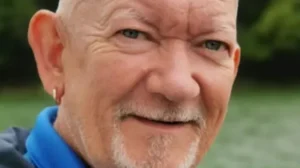
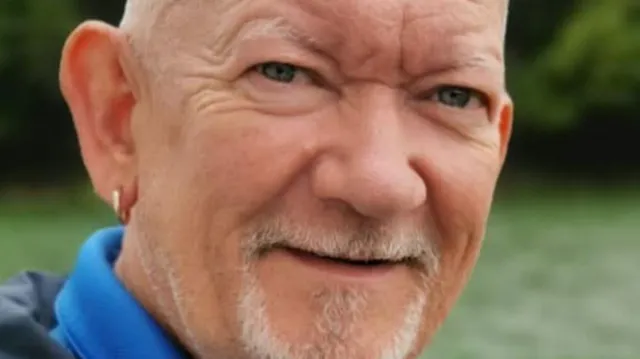
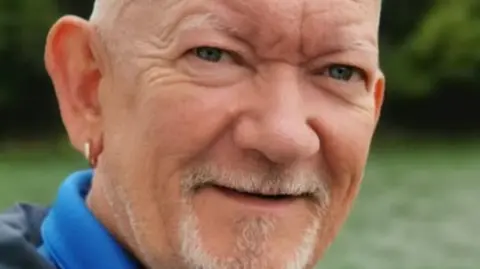
William Chapman only found out he had a terminal diagnosis when his GP mentioned it in passing.
Jonny HumphriesNorth West

 Handout
Hospital doctors failed to tell a father-of-seven he was terminally ill and falsely reassured him he would recover, the health ombudsman has found.
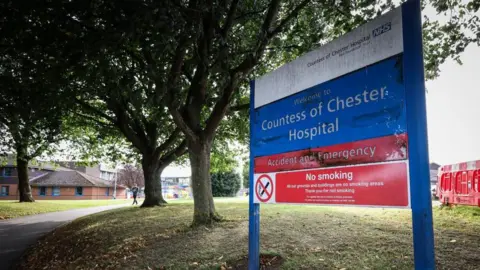
William Chapman, known as Syd, was told “not to worry” by doctors at the Countess of Chester Hospital after being admitted with shortness of breath in July 2021.
But the 58-year-old found out he had in fact been diagnosed with pulmonary fibrosis, an incurable lung disease, when his GP mentioned it in passing on the phone in December that year – eight months before his death.
The Countess of Chester Hospital said it “apologised unreservedly” and accepted the findings of a Parliamentary and Health Ombudsman (PHSO) investigation.
Mr Chapman’s daughter, 32-year-old Chantelle Parker, said her family had “lost trust in the NHS”.
“My dad thought he was going to get better, because that’s what they led him to believe,” she said.
 EPA
EPA“Because of that he carried on working even though it was a struggle for him.
“If he had known the truth, he would have given up work and made the most of the time he had left with his family.”
The PHSO found that after Mr Chapman, from Upton near Chester, first attended the hospital in July he was referred to a specialist lung department for tests.
The former soldier, who ran a cleaning business, was told by a junior doctor in September 2021 that he had “nothing to worry about”.
The PHSO said the doctor did not know that was the case and that Mr Chapman had been falsely reassured.
In November, a consultant diagnosed Mr Chapman with pulmonary fibrosis and wrote a letter to his GP, but did not send the letter to the patient or contact him in any other way.
‘A disturbing case’
Mr Chapman’s GP believed he had been told and casually mentioned the diagnosis in a general discussion about his symptoms, meaning it came as a total shock.
The PHSO said the Countess of Chester took a year to respond to a complaint by the family, did not listen to their concerns and initially did not acknowledge where it had gone wrong.
It also found that consultations with doctors were not recorded properly in Mr Chapman’s medical records and sometimes not recorded at all.
Rebecca Hilsenrath KC, chief executive officer at the PHSO, called the investigation a “disturbing case”.
“When you hear this kind of diagnosis in this way, you lose a sense of dignity and the opportunity to make your own decisions about how to live your life,” she said.
“The family’s trauma was compounded by their treatment during the hospital’s internal complaints handling.”
Ms Parker said a relative had offered to pay for her father to have treatment privately, but he had “such faith in the NHS” that he turned it down.
She added: “Medical staff have a duty of care to tell patients what is really happening.
“It was very traumatic for us all to lose him after being told that he would be fine.”
The PHSO had recommended the Countess of Chester Hospital NHS Foundation Trust acknowledge its failings and apologise to Mr Chapman’s family, make service improvements, improve its record keeping, and pay his wife £1,200.
It said the trust had complied.