Doctors to stage five-day strike before Christmas
Walkout in England begins on 17 December and will be 14th strike in pay dispute.
Nick TriggleHealth correspondent

 EPA
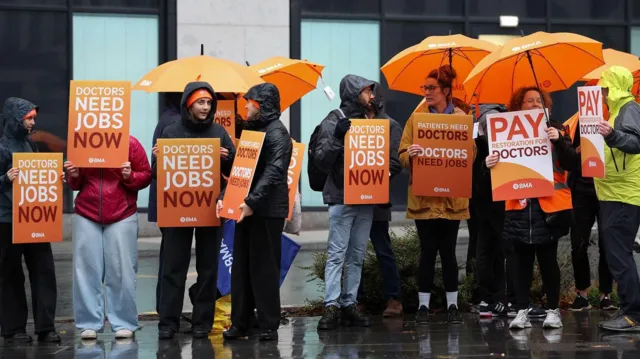
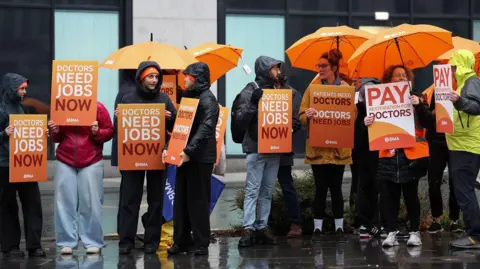
EPAThe British Medical Association has announced a fresh round of strikes in England in the long-running pay dispute.
Resident doctors, the new name for junior doctors, will stage a five-day walkout from 17 December.
This will be the 14th strike by the doctors’ union since March 2023 and is expected to cause significant disruption, particularly in hospitals.
NHS bosses said it was an “inflammatory act” by the BMA as the lead up to Christmas was always challenging.
But the union said it had been left with no choice because it had not received a credible offer from the government.
Resident doctors represent nearly half the medical workforce and range from doctors fresh out of university through to those with up to a decade of experience.
They will walk out of both emergency and routine care, with senior doctors brought in to provide cover.
Daniel Elkeles, chief executive of NHS Providers, which represents hospitals, said: “This is an inflammatory act by the BMA.
“Everyone knows in the run-up to Christmas we need all hands on deck.
“It’s really important to be able to discharge as many patients as possible so that where appropriate they can be at home with their loved ones.
“It’s totally unfair to patients and to other staff working for the NHS.
“Both sides need to get back round the table to break the logjam.”
The walkout follows a five-day strike held last month and that came after talks broke down between the government and union.
The government had offered doctors a deal which involved creating more training posts, improving working conditions and helping them with out-of-pocket expenses such as exam fees.
But the BMA turned that down, saying any deal needed to involve an increase in pay.
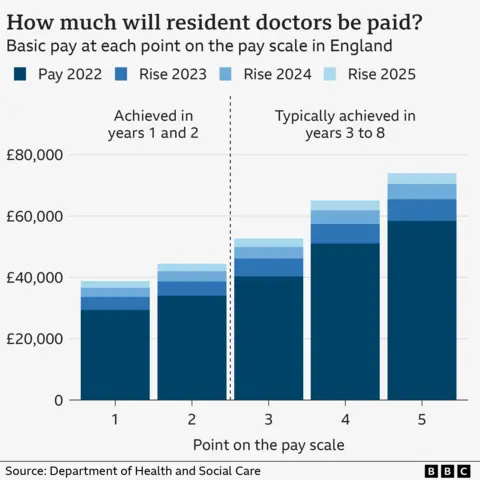
Health Secretary Wes Streeting has maintained he would not negotiate on pay after resident doctors had received pay rises totalling nearly 30% in the past three years.
But the union argues that, despite the pay rises, resident doctors’ pay is still a fifth lower than it was in 2008, once inflation is taken into account.
Dr Jack Fletcher, chairman of the BMA’s resident doctors committee, said as the government had failed to come forward with a credible plan the union had been left with no choice.
But he added: “These [strikes] do not need to go ahead. Gradually raising pay over a few years and some common-sense fixes to the job security of our doctors are well within the reach of this government.”
Health Secretary Wes Streeting said: “The BMA have clearly chosen to strike when it will cause maximum disruption, causing untold anxiety.
“Patients and NHS staff deserve better than this cynical attempt to wreck Christmas.”
The BMA’s mandate for strike action ends in early January, but it has announced it will be holding another ballot of members.